
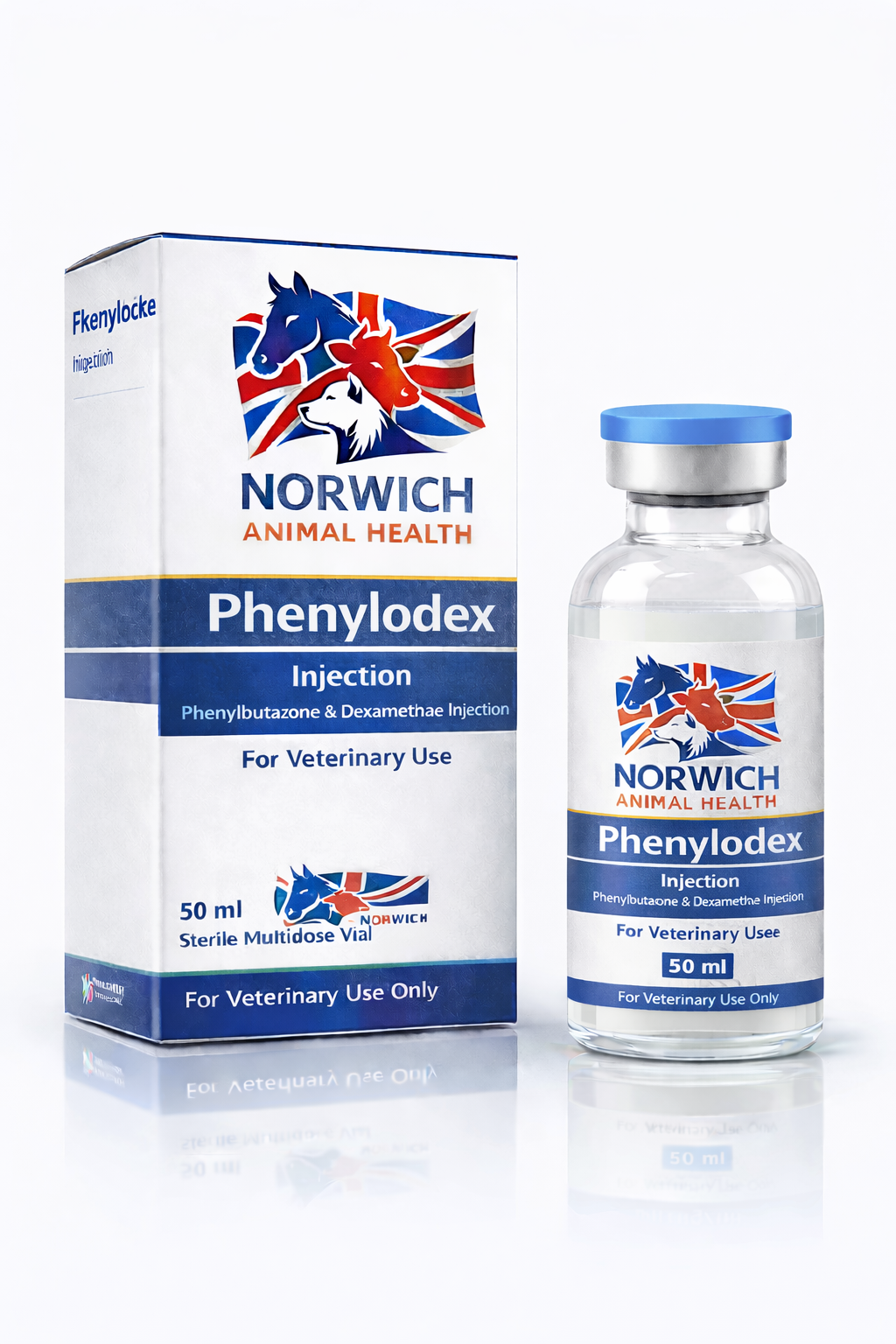
Phenylodex
Phenylodex Injection
Description
Phenylodex Injection is a combined veterinary injectable formulation containing a non‑steroidal anti‑inflammatory drug (NSAID) and a corticosteroid. The combination provides powerful anti‑inflammatory, analgesic, and anti‑pyretic effects, making it suitable for the management of acute and chronic inflammatory conditions, pain, and musculoskeletal disorders in animals under veterinary supervision.
Composition
Each dose contains:
Phenylbutazone ............... 200 mg
Dexamethasone ............... 0.25 mg
Suitable injectable excipients q.s.
Pharmacological Class
Combination of NSAID and corticosteroid – anti‑inflammatory, analgesic, and anti‑edematous agents.
Indications
Phenylodex Injection is indicated for:
Acute and chronic musculoskeletal disorders
Arthritis and joint inflammation
Lameness and soft tissue injuries
Pain and inflammation associated with trauma
Fever and inflammatory conditions
Mechanism of Action
Phenylbutazone inhibits prostaglandin synthesis by blocking cyclooxygenase enzymes, resulting in reduced pain, inflammation, and fever. Dexamethasone enhances the anti‑inflammatory response by suppressing inflammatory mediators, reducing capillary permeability, and inhibiting immune cell migration, providing rapid and sustained relief.
Dosage and Administration
Dosage and duration of treatment must be determined only by a licensed veterinarian, based on the animal species, body weight, and severity of the condition.
Administer by intramuscular (IM) or intravenous (IV) injection as directed by the veterinarian.
Contraindications
Hypersensitivity to phenylbutazone, dexamethasone, or any excipients
Animals with gastrointestinal ulceration or bleeding
Severe hepatic, renal, or cardiac disorders
Concurrent use with other NSAIDs or corticosteroids
Use with caution during pregnancy
Warnings and Precautions
Do not use for prolonged periods without veterinary supervision
Increased risk of gastrointestinal and renal adverse effects
Observe withdrawal periods for food‑producing animals, where applicable
Use strictly under veterinary supervision
Adverse Reactions
Possible adverse reactions may include:
Gastrointestinal irritation or ulceration
Increased susceptibility to infections
Delayed wound healing
Polyuria and polydipsia
Discontinue use and consult a veterinarian if adverse reactions occur.
Storage
Store below 25°C
Protect from light
Do not freeze
Keep out of reach of children